
No Five Year Plans
on process and reinvention with Annie Paladino
I’m not sure you’ll believe me when I tell you that, on searching my camera roll for a photo of me and Annie Paladino together, this is the first one I found:
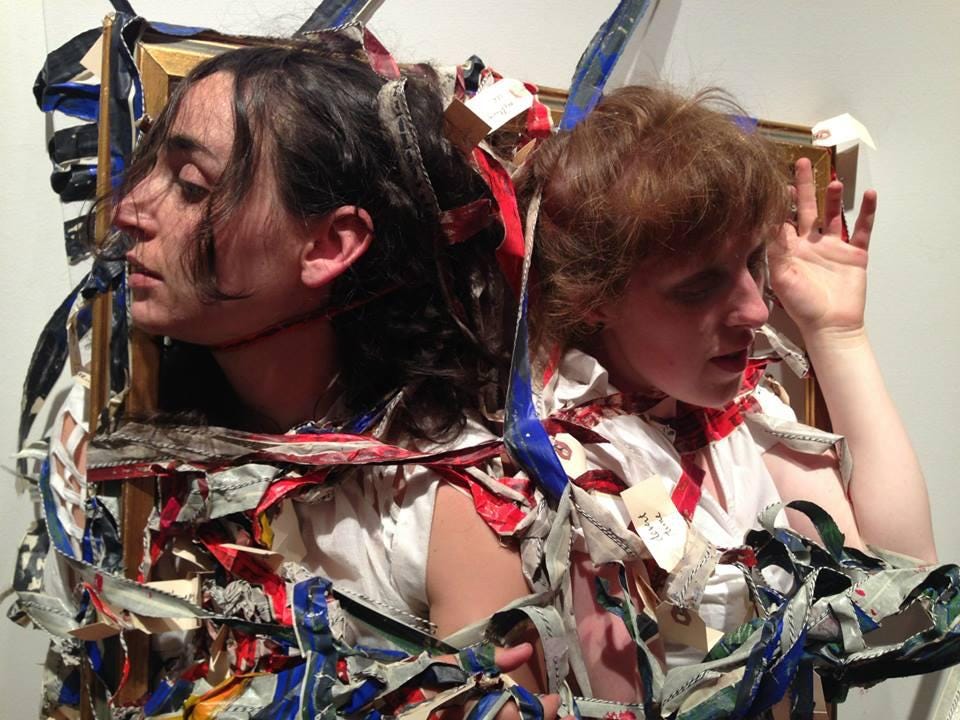
If you can’t tell, we are making ART. (Well, we were being props in our friend Eric Bohr’s art, and maybe taking it a little too far?)
Annie and I met in the early 2010s when we both became company members of Ragged Wing Ensemble in the Bay Area. We trained and performed together for several years. She once made me a chimera — the mythical beast — out of 3 Beanie Babies sewn together. It is one of my most prized possessions. The last time I saw her was in summer of 2016 — a summer of weddings: first hers, in the Pacific Northwest, then a mutual friend’s in north Jersey, where we spent a weekend in our shared rental car blasting Lemonade, which had just been released. Annie now lives in Seattle with her husband and kids, which is where she was when I called her for this interview.
ADDIE Oh– oh– oh– there she is! Annie Paladino! As I live and breathe.
ANNIE Addie Ulrey! How are you?
[insert ten minutes of gabbing between people who haven’t seen each other in a decade…]
ADDIE So, first question. How do you describe yourself professionally, nowadays?
ANNIE Ach, that’s always the worst question, right? I am a personal trainer and strength coach now. That’s how I describe myself.
ADDIE And how long have you been describing yourself that way?
ANNIE Like… a year and a half, probably.
ADDIE Oh! That’s new. What did you say before that?
ANNIE Before that, I said I was an educator and a strength coach. And then maybe five years before that, I would have said an educator and a theater artist.
ADDIE Gotcha. How did this most recent shift happen?
ANNIE Basically, the school that I was teaching at closed their high school branch. And it became a– it was– yeah. Misery. Rough times. And that coincided with going on maternity leave for my second child. So that was a very clear, like, okay, literally getting laid off and going on maternity leave at the same time. A space for something different to happen. Which wasn’t really something different, but just taking this very part-time small business that I had, and seeing if I can build it up into something real.
In theory I’m still on the sub list at the school. And I still direct the middle school musical, which is my one little bit of, yeah, that’s my one bit of theater at the moment.
ADDIE That doesn’t sound like too small a bit to me.
ANNIE (laughs) Right. But it’s time limited. November through February, basically.
ADDIE So it’s just finished. What was the musical?
ANNIE Singin’ in the Rain.
ADDIE Wow, retro!
ANNIE Finding an appropriate musical for middle school is, like, impossible. All older musicals are essentially subtitled rape culture. Like every single one of them. And most modern musicals have inappropriate junior versions… And then you’re kind of left with Disney, which I don’t want to do.
ADDIE So strength coach moonlighting as a middle school musical theater director.
ANNIE Yup.
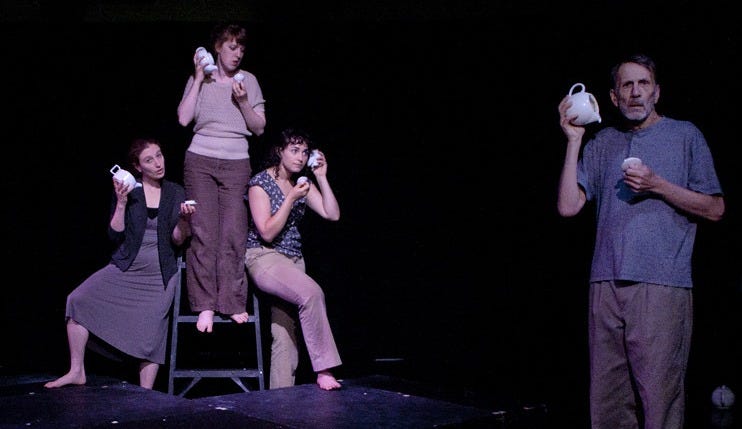
ADDIE So let’s consider this present moment as one point on the map. Now I’m going to ask you to go back to roughly the point when we met. We were both in our mid-20s, living in the San Francisco Bay Area. If you can just briefly describe where you were at, personally and professionally, when we met.
ANNIE At that point I was describing myself as having (fun voice) “Two careers! One that pays me money and one that doesn’t!” I was a research assistant, which paid me money. And then I was a theater artist, and I was doing a lot of stage managing also.
ADDIE So you were a few years out of undergrad, you had studied theatre at Wesleyan, you had moved to the Bay Area… was that a theater-driven decision or a personal decision?
ANNIE That was moving with my [now] husband for him to go to medical school. And it was a very last-minute thing. We were graduating and I was like, “I don’t have anything specific, so I will go wherever you go.”
ADDIE How do you remember feeling at the time, about the place that you landed? How did you feel about the theater scene in the Bay?
ANNIE I started interning right away at Cutting Ball, and that felt very much like oh, these are people doing the weird good stuff. But it took me a while to find other things that I was interested in. I had seen a Fool’s Fury show years earlier, visiting San Francisco, so I had that in my mind. But then I moved there and I was like, “hm, there aren’t actually that many other people doing this kind of work here.”
ADDIE What about Ragged Wing? That company is obviously the reason we met, and it also played a huge role in my artistic becoming. How do you think of your time with Ragged Wing?
ANNIE Ragged Wing was definitely where I first felt really *seen* as a performer, in a way that I hadn't since college. A lot of RWE training exercises and devising methods still form the backbone of my approach to doing theater with youth, particularly the middle school age. I also think that working with RWE helped me get more comfortable with artistic sincerity, if that makes sense. There's a real tendency in devised/experimental theater to put everything in quotation marks, or to have a slight veneer of cynicism applied to the work. It was an environment where I felt comfortable and seen.
ADDIE What about Time Sensitive? That was the big Ragged Wing show we acted in together — you played Tilly, the role many of us wanted, while I played the ancient clockmaker… (I have a strong track record of getting cast as old people). In my mind, that show embodied one of the peak versions of the company, of really feeling a sense of virtuosity as a group.
ANNIE I totally agree! That was a really meaningful show for me. I actually tried to do that show with 12th graders a few times — we had a tradition of the students picking their senior play, but we always did it from a curated pool of options. I included Time Sensitive in the short list with two separate groups of students, but they didn’t bite.
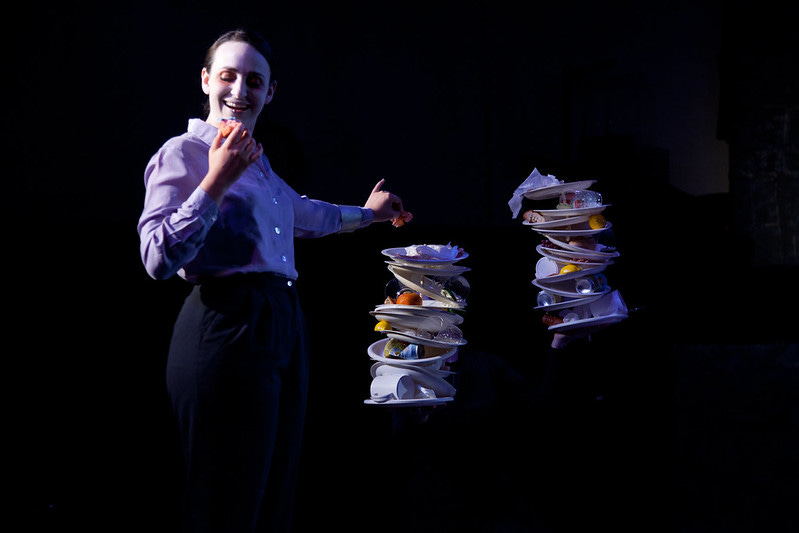
ADDIE And in that era — the San Francisco era — how did you feel about where your career was headed? What would you have said about what your goals were?
ANNIE I don’t know that I would have been able to answer that. I am chronically bad at five-year plans. It’s not the way that I think about things. So I don’t know. I think I probably would have said, like, I’m still figuring it out. My undergrad degree is a theater and psychology double major, so I was working as a research assistant, psychology-whatever– it was like education research. So that was of interest, but I very quickly realized I didn’t want to pursue a Phd, and I wasn’t going to be a research assistant forever. That did not feel correct. So I think I would have probably said my plan was to work in the arts in some way. I also think— you’re one year older than me, is that right?
ADDIE I just turned 40.
ANNIE So you graduated in ‘08?
ADDIE Yes.
ANNIE I’ve been thinking about this a lot, because I am having, like— I feel bad about it, I feel like a bad person, but I’m having schadenfreude about current college students graduating into the worst job market in recent memory. And it’s like, “oh, the only time it was this bad was when I was graduating.” (laughs) Nobody remembers what that was like! I’m like, welcome, you guys. Welcome. Because that’s my memory, is that I had friends who were competitively vying for unpaid internships in New York. And I was like… yikes. You know? It was just really brutal. I don’t know if that answers your question.
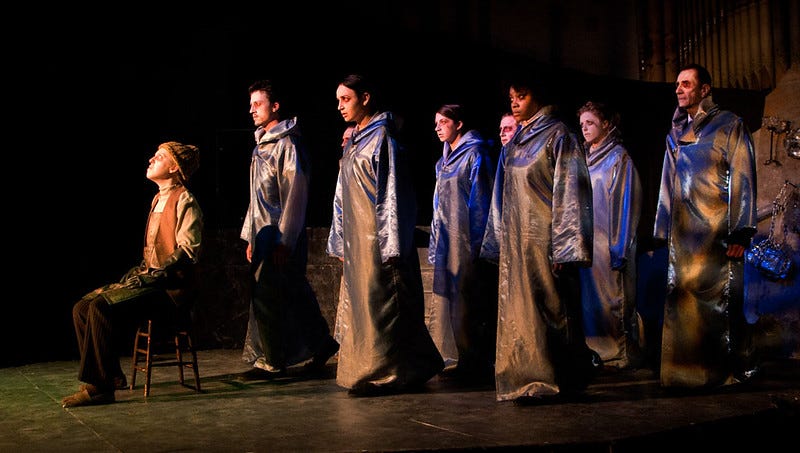
ADDIE Okay, so now we’ll rewind another several steps. I’d like to have you put one more point on the map, and this is you at 17, 18, whenever you decided that you were going to pursue theater as a course of study.
ANNIE It actually wasn’t until I was in college. On my college applications I didn’t put theater, even though I thought I might be a double major. I put biology. Then, in the middle of my freshman year I got the first C of my life in Intro Bio at the midterm, and was like, “Nope.”
ADDIE So you felt, maybe, discouraged? And it allowed your other interest to come to the fore…
ANNIE Yes. I was also discovering more about theater theory. And being like, ohhhhh… I have always kind of disliked theater people, unfortunately. But I began to discover this other entry point that felt more rigorous, less egotistical. That was brand new, and I wanted to know more about it.
ADDIE I think a lot of us, at least in our corner of the theater world, had to get past the culture of theater that we were introduced to in high school.
ANNIE Totally.
ADDIE So tell me about a project you did during that time that was really important to you.
ANNIE I’d probably say the first devised show that I worked on, for which I was the stage manager. It was someone’s senior thesis. She was very inspired by Tectonic Theater; it was a documentary process. So it was like, hey, we’re starting rehearsal, we do not have a script. We have source material and we have actors, and we will be making this together. Because I was stage managing, I got to experience the process from slightly outside— to have an architectural understanding of it rather than a performer understanding.
ADDIE And what was it that blew your mind about that process? What did you discover was possible?
ANNIE I think it was the malleability of it, right? The non-linearity, not just of the show but of the process. All of these elements were feeding into each other and influencing each other. There are words that get spoken, but the text isn’t– there’s not a hierarchy of meaning. The costume could be the thing that conveys meaning in one moment, more than the text. Any element can be the primary meaning driver. That was, I think, very formative.
ADDIE For sure. And what was your vision at that point of what you might do for work, or do career-wise? What was your vision of being an artist?
ANNIE I think I was more interested in academia at that point. I toured some theater Phd programs near the end of undergrad. That was the angle I was interested in. But then… I don’t know. I felt like that was not actually a career path that existed in the way that I thought it did.
ADDIE So we have these 3 points on the map: you at 19, you at 25, and you now. Obviously, we won’t be able to fill in everything between those points, but if you were to describe one or two moments that you see as turning points or decision points… where would you place those? What did you see yourself choosing and what were you sacrificing at those points?
ANNIE Right. Okay.
Certainly moving to Seattle is one of those points. I was very afraid of losing community, San Francisco community. I felt like I had been in San Francisco for a million years, although looking back now, it was four years! I was there for four years.
So, moving to Seattle and connecting with the theater group that I ended up working with here, Akropolis. That’s a very specific point. Also, at that point I stopped working in research, and started working at a school. I started administering after-school programs.
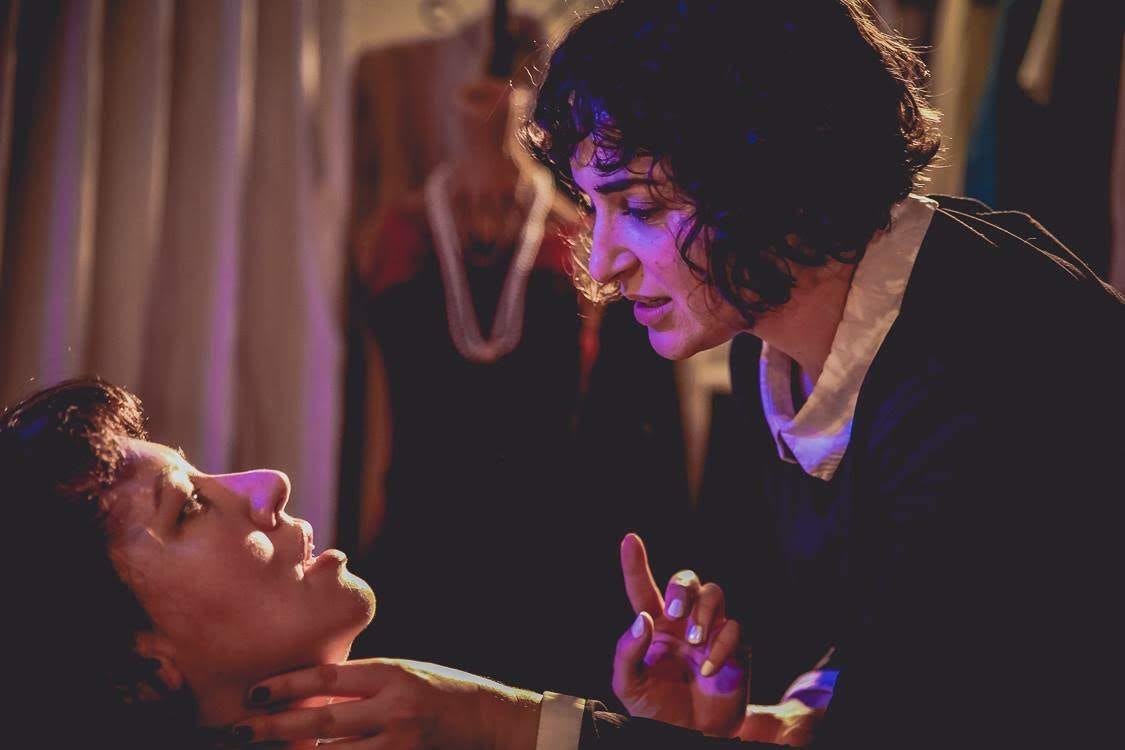
ADDIE When you found this new company to work with in Seattle, how were you thinking about that work? Were you looking for community? Were you still thinking of performing as part of a career you were pursuing, a career move?
ANNIE I really never felt that a quote unquote “career” in theater was a thing that was going to be of interest or possible for me. It just did not feel like that was something that was… I don’t know. I was not interested in doing the things necessary to make that happen. I think part of that is my underlying belief about how theater is sold to high school students as a career path equivalent to, like, nurse! or teacher! (laughter) When it’s definitely not a career path. Like, this is not a thing that exists! It is not a career.
So yes, I have some hang-ups about the way it is marketed, and also the idea that, like, doing arts is only legitimate if it leads to a money-making career. I have a renegade streak of like, no, it’s actually the opposite. So maybe that underlies my desire to maintain [a theater practice] as a thing I am putting time and energy into, that has worth for other reasons.
ADDIE So you were never pursuing it as your money-making career, but you were pursuing a life as an artist.
ANNIE Right.
ADDIE And that continued when you moved to Seattle and worked with Akropolis. And you were both performing and directing with them. Until when? How did that end?
ANNIE So that was like a COVID casualty, 100%. That’s actually the other inflection point. I only have children during times of upheaval, I guess, either personally or globally. So Evan, my first child, was born in July 2020. I was already planning to take a step back from the company because I was like, I don’t actually think being a parent is compatible for me with– it was like a one-to-one trade, being a theater artist with this company for having a young child. But then because of COVID, the company couldn’t do the shows it was planning on doing, and things started winding down, and then people sort of scattered. The two artistic directors ended up moving, not too far, but outside of Seattle, and opening a bed and breakfast.
ADDIE Hm. So what was planned as a personal pause became a bigger ending. There was no company to return to.
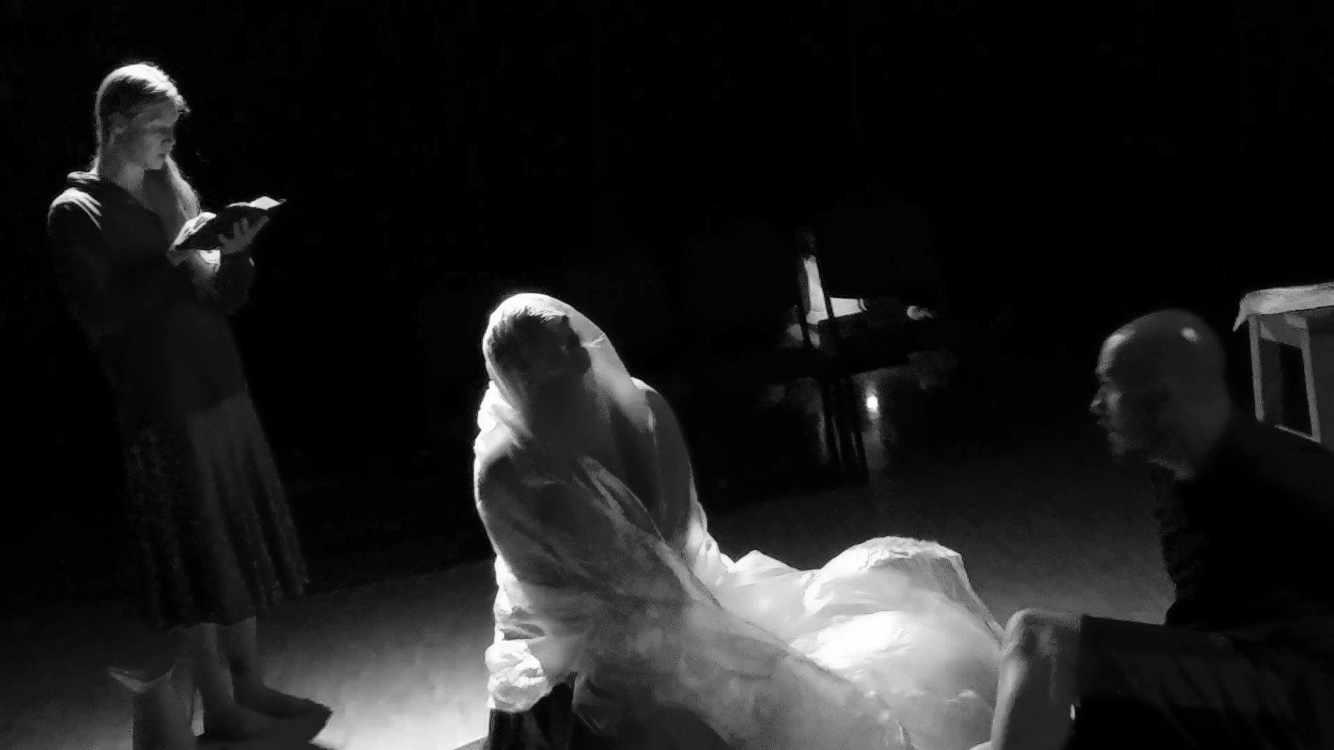
ADDIE Looking at this timeline as a whole, as we’ve just mapped it out, what are some of the choices you feel most proud of?
ANNIE In general?
ADDIE Yeah. Personal or professional or both.
ANNIE Sure. Um… I mean, I think… in both San Francisco and Seattle I started with a company by just showing up.
In San Francisco, I had just moved there, I saw that Cutting Ball was doing Krapp’s Last Tape, and I had just written this 90-page thesis on Beckett. So I just went and said, “Can I work on this?” They were already mid-process but they needed an ASM, so I did that.
And then same in Seattle. When I moved here, my college advisor was like, “Oh hey, my former Grotowski people who I used to run around in a yurt in Irvine with live there, you should reach out.” I did, and they were just starting rehearsals for Uncle Vanya, which was also a show I knew really well. I was like, “I’d love to work with you guys,” and they were like, “Great, do you want to be the assistant director?” Because the director was also in the show. And it was super great.
So…those were both slightly uncharacteristic “Hey I want to work with you!” gestures. Which were very fruitful and positive.
And then, at Seattle Waldorf School, where I was administering after-school programs… as it happens at these tiny schools, someone got wind that I was a director. And they asked, “can you come direct the 8th grade play?” So I started doing some of that. Then at some point the high school theater teacher was planning to resign. I had seen his shows, he had seen some of my shows, and he specifically was like, “hey, I think Annie should take this on.” Even though she doesn’t have a Waldorf credential, she doesn’t have a teaching credential, blah blah blah. And that required me saying yes, I will add what is definitely more than 25% teaching on to my three-quarter-time admin position. And suffering through a few way-too-busy years before saying, I actually want to let go of the admin thing and only do the teaching part. So yeah, saying yes to that, despite it being way too much work for like two years. It was the right decision and ended up being a very positive trajectory.
ADDIE And then on the flip side of this, what are some… I’m more interested in framing this question as, “what are some sadnesses you have?” rather than regrets. But what are some things that you wish had happened, or that you had expected and hoped for that did not happen?
ANNIE Yeah, it’s hard to say… I don’t know about regret in terms of leaving San Francisco, but it definitely felt like a… like that was not my choice. That was a “personal reasons” thing. So calling that more of a sadness than a regret feels very accurate.
Certainly the high school closing. It felt like I was building an interesting theater program. It was a tiny school, but I had put a lot of effort into that, and because it was just this random, private Waldorf school, now that it’s closed that will just not exist, right? It doesn’t go anywhere.
[ANNIE finds herself tearing up.]
ANNIE Yeah, still sad about it, obviously.
[They take a moment]
ANNIE And then, I think, 2020, right? COVID created a similar premature ending of theater in Seattle, which has not returned very robustly, even beyond me.
ADDIE I feel like I’m putting together as we’re talking how recent a lot of these major shifts have been for you.
ANNIE Right. And they’re tied to having my kids, which is weird. I have the 2020 tie with Evan. And then, when I found out the high school was going to close, I was six weeks pregnant with Zoe.
ADDIE In both cases, you thought you were taking a break from something to have a kid, and then that thing disappeared.
[ANNIE nods.]
ADDIE It’s interesting, in both interviews I’ve done so far, we’ve reached this point in the conversation and I’ve thought, “Geez, we’re talking like we’re 60!” You know? Like much more of our lives and career decisions are behind us than perhaps they actually are. I think my interest in having these conversations right now, at this moment in my own life, is that I am starting to feel old in certain ways. Like there isn’t time for everything. But there’s still time for a lot. It’s a funny age we’re at, where we’ve made a fair amount of irreversible choices, and there’s still time for another whole life.
ANNIE Totally.
ADDIE So let’s talk about the future. I’m curious about the strength training business, and what part of your creative self that is feeding.
ANNIE I had this realization recently that I like process. Which seems obvious now that I’ve thought it. I like starting from zero and going to something. When I am coaching people I really prefer to work with beginners. Like, I kind of have no interest in working with a powerlifter to take their squat from 300 pounds to 320 pounds? It’s not of interest to me. But having someone go from zero and making some dramatic sort of change. That is of way more interest. And I was like, oh yeah, that’s theater, right? Making something when there was no thing there before.
ADDIE All theater is very physical, but the type of theater that you and I were doing is especially physical. What’s the connection, do you think, between that and the strength training work?
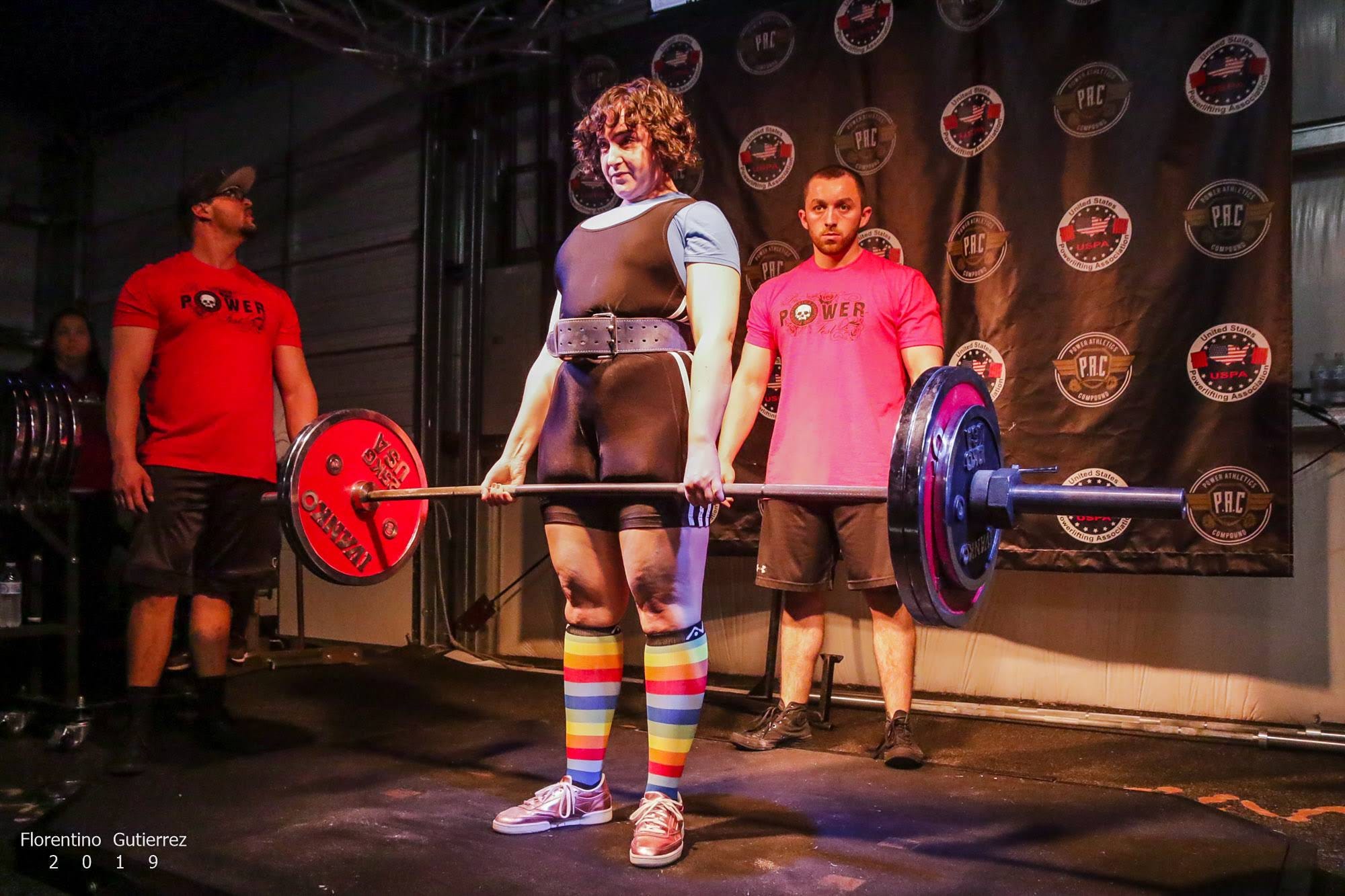
ANNIE That’s a really good point. Embodiment is probably the connection there, right? But also a lot of the people that I work with and that seek me out are doing it from a fat positive, body positive sort of perspective. And that feels connected because… well, part of this is just very personal. My entry point to strength training was literally doing physical theater in college and being like, “Why is this harder for me? It’s because I’m bigger than other people.” And then being like, “Okay, I guess the answer is that I have to be stronger in order to run around a room barefoot with these people.” My boyfriend was teaching himself how to lift weights, and taught me how. And then I felt like the strongest person who had ever existed. And the physical theater work was easier. It felt like a thing I could participate in more.
And so I think there’s a value in improving… ability? Ability to use your body in the way that you want to. Whether that be to express something artistically, or to hike.
ADDIE Mm. That’s cool. That through-line feels very real. And are there things you are missing right now? Parts of your creative self that feel dormant?
ANNIE I miss collaborators. I’m with people all the time, but they are clients, or students. And having collaborators, having that co-creator relationship, that’s a part of theater that really works for me.
ADDIE Going back to aging, I’ve been having conversations recently with friends about, like, what is that one thing – and maybe it’s not one thing for everybody — but for several people I’ve talked to, there’s a desire or goal that exists at this moment that’s sort of like, I don’t know whether or not it’s too late for this, but I still want to make it happen. I’m curious whether that resonates for you.
ANNIE No… I don’t really have that. I think that’s part of my resistance to like, career as a concept, you know? Capital-C Career has never been something that’s desirable for me, for better or worse. I like the idea of– not constant, but frequent pivots. Not wholesale reinventions, but like, changes in what you’re doing and spending your time on are like normal and to be expected! That’s something I’ve kind of always held.
ADDIE There’s something about that perspective, what you’re saying about taking continuous or seasonal reinvention as natural, that feels very refreshing.
ANNIE Right, and we hold up people who do only one thing as the model of success, but actually they’re anomalies. Actually there are way more success stories of the opposite. People who did many different things, then landed on one. Or didn’t, right? People who did many things and enjoyed them all.
And so I don’t think I have a thing I’m wanting that’s in the future that I’m trying to like, grab. I have a hard time with, as I said, future-thinking in general. So that might be a part of it. But yeah. There is not one thing that I think about.
ADDIE You’re also really in it right now. You’re in the throes of your newest… reinvention.
ANNIE Yeah. That’s right. I am.
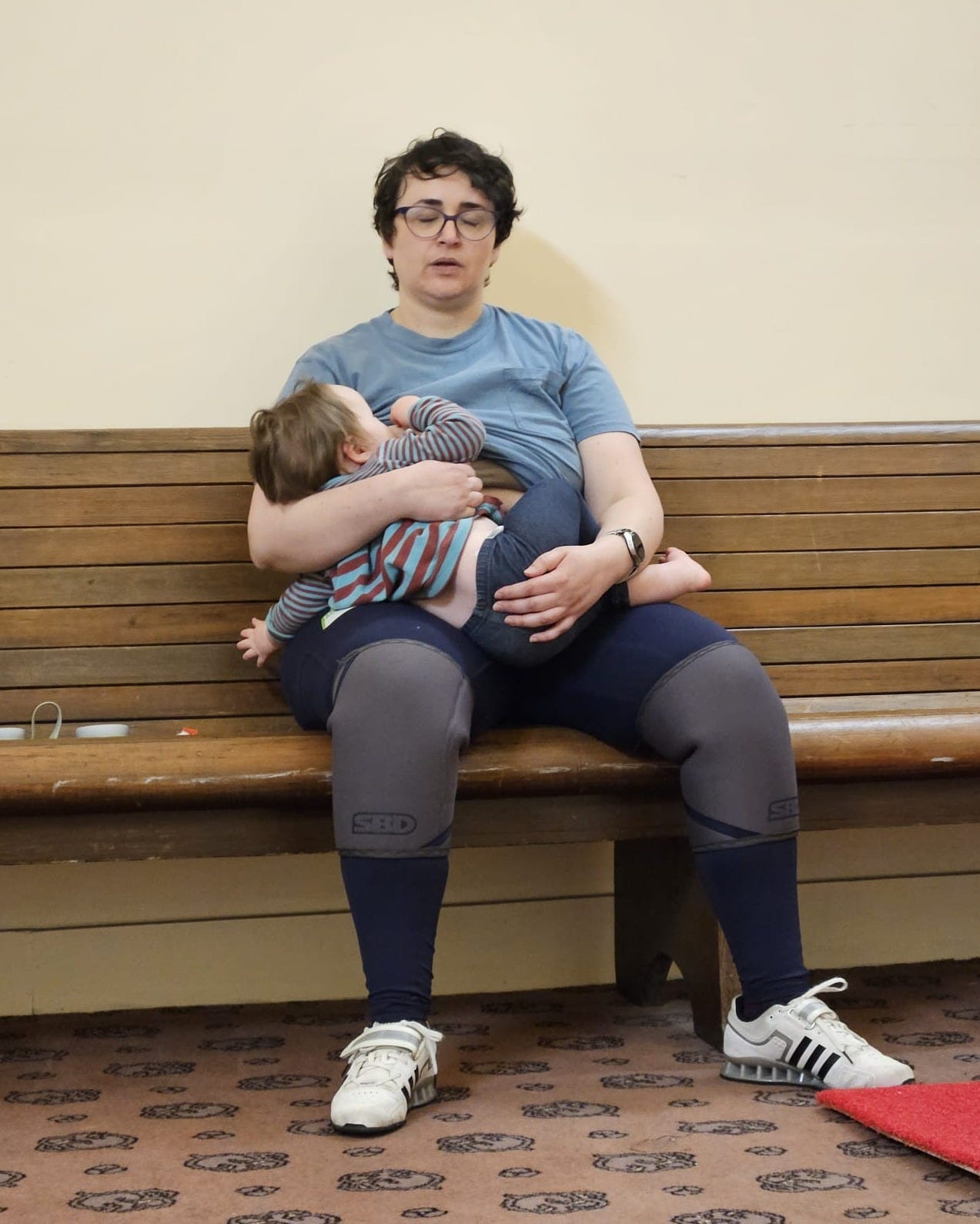
If you live in Seattle, you should hire Annie to make you strong! Check her out at Paladino Strength. And/or, if you wish to lure her into collaboration, let me know and I will put you in touch.